The average household today relies on a variety of gadgets for work and to manage different house chores. This often results in higher energy consumption and, subsequently, higher energy bills. For large residential developments, retail chains, and property projects, this growing demand has made window film for energy savings an increasingly practical solution.
As we know, high energy consumption is not eco-friendly because most of the world relies on non-renewable energy sources. High energy bills, on the other hand, are simply terrible for your financial wellness, which is why many buyers and facility managers now ask is window film energy efficient when evaluating building upgrades.
Rising energy costs and increasing demands for home comfort have pushed many homeowners and building managers to look beyond traditional solutions. Window film has emerged as one of the most cost-effective upgrades available — capable of reducing home energy consumption by up to 15% without replacing glass or altering building structure. This guide explains how it works, what types are available, and what results you can realistically expect.
Window Films: The Basics
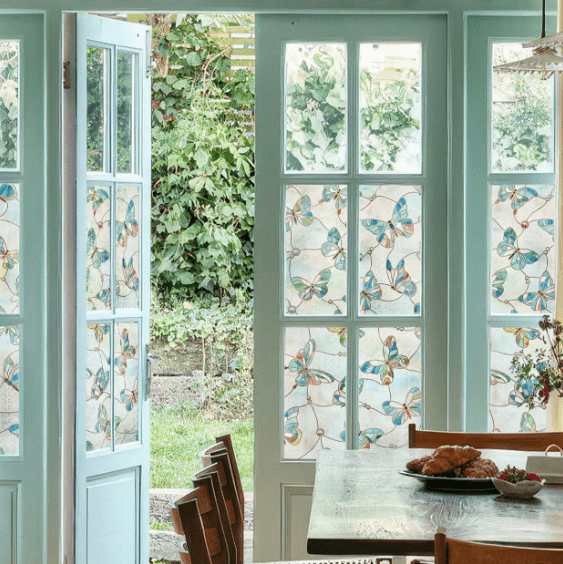
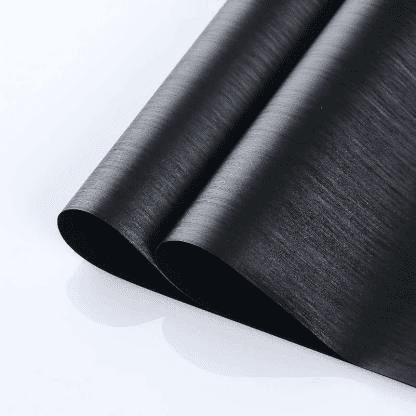
Window films are compressed sheets of material made using PET. They are coated or treated with different dyes or other materials, like metal or ceramic, to make them suitable for different functions, including modern energy saving window films designed for residential and commercial use.
Initially, window films were made to provide privacy in spaces with transparent glass windows or doors. Designs and manufacturing technologies have, however, evolved. Window film manufacturers now offer a variety of window films that can provide window film energy savings through:
- Ultraviolet ray protection
- Insulative protection
- Anti-glare protection
How Does Using Window Films Save Energy?
Window films improve energy savings in homes by reducing the energy you use for heating and cooling. At first glance, this may seem negligible. So, let’s put it in perspective using tangible figures that are often used by procurement teams to justify window film for energy savings investments.
- Expert research on global energy consumptionindicates that about 25% of the energy produced in the world is used to heat and cool homes and other spaces.
- In the US, energy authorities state that heating and cooling accounts for about 50% or more of residential energy bills, which clearly explains why window film energy savings have become a priority in large-scale housing and retail projects.
Now that we have better context, let’s explore how window films impact heating and cooling, shall we?
How Window Films Reduce Cooling Costs
Homes get hotter during warm seasons or summer months. A large portion of this heat enters your home through your window panes and glass doors if you have them, making energy saving window films particularly valuable in sun-exposed regions.
The heat from the sun is particularly transmitted through infrared radiation/rays. Solar window films are manufactured using specific materials that either:
- Reflect infrared rays away from your windows.
- Absorb the heat from the infrared rays and gradually dissipate it into the atmosphere outside your home.
Both of these solutions demonstrate exactly how does window film save energy, as they prevent excess heat from flowing into your home and raising the temperature in different rooms. As a result:
- Your home stays naturally cooler than it would if you did not have window films.
- You end up consuming less energy to maintain cool comfortable temperatures in your home.
- You incur lower energy costs.
How Window Films Reduce Heating Costs
During winter or cold seasons, homes get colder due to the frigid temperatures outside. Further, the heat generated inside your home is easily lost to the cold atmosphere around the house, which is why window film energy savings are not limited to summer alone.
Glass windows and doors are much thinner than walls. They are, therefore, some of the prime areas through which your home loses heat to the cold atmosphere outside.
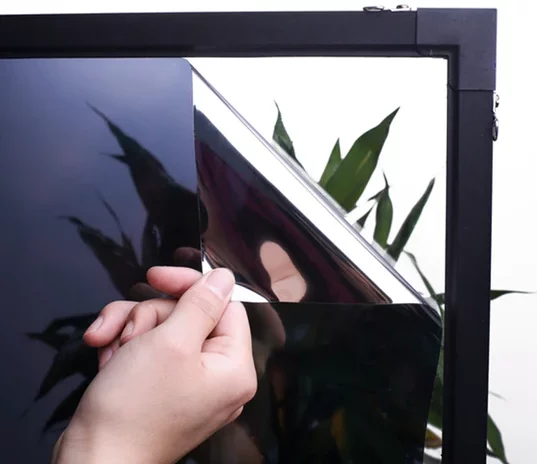
Installing window film on your glass windows and doors creates a layer of insulation on them. This significantly reduces the rate at which they lose heat to the outdoors. In turn:
- Your home stays warmer than it would without window films.
- You consume less energy to heat your home because the rate of heat loss is much lower.
- You incur lower energy bills.
Multi-layer window film is particularly effective for this type of requirement. Its higher density makes it harder for heat to be transmitted out of your home and through the window panes, which is why multi-layer energy saving window films are often specified for larger projects.
How Window Films Mitigate Lighting Costs
Dark-tinted window glass is one of the most common alternatives to using window film. It, nevertheless, presents a key challenge as most tints filter out most of the natural light from the sun, raising doubts for buyers asking is window film energy efficient overall.
Consequently, you may have no choice but to keep your lights on. More so in areas like the kitchen or home office where proper lighting is crucial. This would undoubtedly increase your energy costs as you would need to keep some lights on even during the daytime.
Innovative window film solutions like ceramic window films eliminate such challenges. They are made using materials that do not obstruct the flow of natural light through your windows, allowing full window film for energy savings benefits without compromising brightness.
How to Choose Window Film for Energy Savings
Aim for High Infrared Rejection Ratings
An infrared rejection rating (IRR) indicates the percentage of heat that a window film can reflect or absorb. A high IRR means the window film material is highly effective at preventing heat rays from flowing through your windows and maximizing window film energy savings.
Window film installations typically offer a return on investment within 3 to 5 years, depending on local energy prices, climate, and glass surface area. For homes with large south or west-facing windows, savings tend to be most pronounced. Many homeowners report reductions in cooling-season energy bills in the range of 10–15% following installation.
(Note: actual results vary by film type, installation quality, and building characteristics.)
Prioritize High VLT
Visible Light Transmission (VLT) indicates the percentage of light that a window film will allow through your windows.
The lower the VLT rating, the lesser the amount of light that will come through your windows. In contrast, a higher VLT means you will enjoy more natural light. Aim for a VLT of about 50% or more when selecting energy saving window films.
Notably, window film manufacturers usually need to balance different materials when making window films so as to deliver features like insulation or light flow. It is why you may find a window film with an IRR of 90% but a VLT of 53%.
The trick here is to prioritize the factor that matters most in your application or aim for a compromise. For instance, the sample ratings we have mentioned above offer a good balance; an IRR of 90% provides high heat protection and a VLT of 53% delivers adequate natural light while still ensuring window film energy savings.

Conclusion
So, what is the verdict? Does window film reduce energy costs? Yes, it does. In fact, the answer to does window film save energy is supported by both data and real-world application. You only need to choose quality energy-efficient window film, ensure it is properly installed, and watch your energy savings start to build up.
Finding the right energy-efficient window film starts with understanding your project’s specific requirements — window orientation, climate zone, light transmission preference, and installation scale. Fancyfix offers a range of solar control, ceramic, and multi-layer window films available for wholesale supply, with OEM and ODM options for distributors and contractors.
Explore our energy-efficient window film range →
For bulk inquiries or product specifications, contact our team directly.