What Requirements Must Hotel Wallpaper Meet?
Hotels, motels, hostels, serviced apartments, and any accommodation facility with public corridor access are legally classified as “places of public assembly” in most jurisdictions. This classification triggers a specific set of requirements for every building material — including wallcoverings — that go far beyond what residential products must satisfy.[1]
Fire Retardancy: The Non-Negotiable Foundation
Fire protection is the primary qualification hurdle. In every major hospitality market, wallcoverings installed in areas accessible to guests — guest corridors, lobbies, stairwells, and guest rooms — must carry a verifiable fire performance certificate issued by an accredited testing laboratory, not merely a manufacturer’s claim of compliance. The specific classification system varies by country (see Section 2), but the underlying requirement is universal: wallcovering must be at minimum “low flammability,” meaning it self-extinguishes when the ignition source is removed.[2]
Durability & Hygiene Standards
Guest rooms in commercial hotels experience significantly higher wear cycles than residential spaces. Industry data from hospitality facility management indicates that high-traffic hotel corridors may see 30–50 wall-contact events per day per linear meter — scuffing from luggage, cleaning equipment, and maintenance carts.[3] The Wallcovering Association (WA) classifies washability in four tiers:
Water-resistant — tolerates surface wipe with damp cloth
Washable — tolerates mild soap solution, low mechanical pressure
Highly washable — tolerates repeated cleaning with moderate mechanical pressure
Scrub-resistant — tolerates repeated cleaning with hard-bristle brush; required for corridors, kitchens, and laundry areas in commercial properties
Indoor Air Quality & VOC Emissions
Guests spend extended time in enclosed spaces. Wallcoverings that off-gas volatile organic compounds (VOCs) — particularly formaldehyde from adhesive systems and plasticizers from vinyl substrates — negatively affect indoor air quality ratings and can trigger compliance issues in markets with strict VOC regulations, including California (CARB Phase II)[4] and Germany (Blauer Engel eco-label).[5] All Fancyfix commercial wallcovering products are screened for VOC content and carry available REACH compliance documentation for the EU market.
Acoustic Performance
Noise transmission between guest rooms is one of the most common hospitality complaints recorded in review platforms.[6] While wallcovering alone cannot substitute for structural acoustic insulation, the surface texture and substrate density of a wall product makes a measurable difference. Smooth, thin vinyl wallcoverings offer near-zero acoustic benefit; textile-backed or relief-pattern heavy vinyl products — particularly Type II commercial grades — add a meaningful absorption coefficient, particularly in the mid-frequency range (500–2,000 Hz) relevant to voice transmission.
Fire Safety Standards by Market: US, EU, AU & Japan
One of the most consistent points of confusion in international hotel procurement is the assumption that a certificate valid in one market transfers across borders. It does not. Each major hospitality market maintains its own testing methodology, classification framework, and regulatory enforcement channel. The table below provides a practical reference for procurement managers sourcing across multiple markets simultaneously.
🇺🇸 United States
NFPA 701 + ASTM E84 Class A
NFPA 701 tests flame spread on textiles and films. ASTM E84 (Steiner Tunnel Test) classifies surface burning characteristics — Class A requires Flame Spread Index ≤25, Smoke Developed Index ≤450. Applicable in all 50 states for commercial occupancy. California additionally requires NFPA 701 + CA Title 19.[2]
🇪🇺 European Union
EN 13501-1 (Euroclasses A1–F)
Harmonized across EU/EEA member states. Hotel wallcoverings require minimum Class B or C (with s2/d0 smoke & droplet ratings). Products also rated on smoke emission (s) and flaming droplets (d). German hotels apply DIN 4102-1 B1 as the practical minimum, broadly equivalent to Euroclass B.[7]
🇦🇺 Australia / NZ
AS/NZS 5637.1 + NCC BCA
AS/NZS 5637.1 covers fire hazard properties of wall & ceiling linings in buildings. The National Construction Code (NCC/BCA) references AS 5637 for Class 3 buildings (hotels). Group 1 and 2 classification required for guest corridors and public spaces.[8]
🇯🇵 Japan
F-13039 (Quasi-Non-Combustible)
Japan’s Building Standards Act classifies interior finishing materials. Hotels with 31m+ height, or with guest rooms above 3F, require “quasi-non-combustible” or “non-combustible” materials in corridors and stairwells. Certification through the Ministry of Land, Infrastructure, Transport and Tourism (MLIT).[9]
🇩🇪 Germany
DIN 4102-1 B1 + BeherbergungsVO
Germany’s Beherbergungsverordnung (accommodation regulations) mandates B1 “low flammability” for all wallcovering in public areas. DIN 4102-1 B1 is broadly equivalent to Euroclass B under EN 13501-1. Certificate must be presented to authorities on request.[10]
🇫🇷 France / Benelux
NF P 92-503 (M1 Classification)
France, Belgium, and Luxembourg historically used M-ratings (M0–M4). M1 (very little flammability) is required for hotel public areas. As EU harmonization advances, EN 13501-1 certificates with equivalent Euroclass are increasingly accepted alongside M-ratings.[11]
Type I vs. Type II Wallcovering: Which Do Hotels Actually Need?
The Wallcovering Association (WA) and ASTM International jointly define commercial wallcovering by performance classification into Type I and Type II grades — a specification system widely used by architects and interior designers when writing project specifications.[12] Understanding this classification is essential for any hotel procurement specification.
| Property | Type I — Light Duty | Type II — Medium/Heavy Duty | Recommended Zone |
| Weight | ~12–15 oz/linear yd (≈407–508 g/m) | ~20–28 oz/linear yd (≈678–950 g/m) | — |
| Tensile Strength | ≥50 lbf (machine direction) | ≥100 lbf (machine direction) | — |
| Tear Resistance | ≥20 lbf | ≥40 lbf | — |
| Washability | Washable | Scrub-resistant | — |
| Abrasion Resistance | ≥300 cycles (Wyzenbeek) | ≥1,000 cycles (Wyzenbeek) | — |
| Typical Use — Hotels | Guest rooms, suites | Corridors, lobbies, elevators, F&B | — |
| Fire Cert Compatibility | ASTM E84 Class B+ | ASTM E84 Class A | Type II for all public zones |
A practical procurement rule of thumb: specify Type II for any area where maintenance staff push carts, where luggage trolleys operate, or where multiple people pass simultaneously. For the majority of guest room feature walls — typically accent panels behind the bed — Type I is adequate and allows a wider design palette at lower cost per square meter.
Design vs. Compliance: How to Balance Both
The conventional hospitality supply market has long presented design and compliance as a trade-off: “contract wallpapers” — heavy vinyl products certified to the highest fire standards — are invariably plain, neutrally toned, and resistant to pattern or custom colorways. Meanwhile, design-forward wallpapers rarely carry hotel-grade fire certifications because the certification testing process is expensive and manufacturers of artistic wallpapers typically serve residential markets where certification is not required.[13]
This gap is narrowing. Two manufacturing developments have changed the equation for hotel procurement teams:
1. Fire-Treated Substrates with Digital Print Surfaces
Modern commercial wallcovering production can layer a fire-retardant non-woven or vinyl backing — carrying the B1/Euroclass B/ASTM E84 Class A certificate — with a digitally printed face layer that accepts high-resolution custom patterns, brand colorways, and photographic murals. The certificate applies to the composite product as tested, not the ink layer alone. This means any custom design printed onto a certified substrate retains the underlying fire classification, provided the ink formulation and print method are included in the original test scope. Always confirm this with your supplier before committing to a custom design project.
2. Decorative Window Film & Wall Film as a Compliance-Friendly Alternative
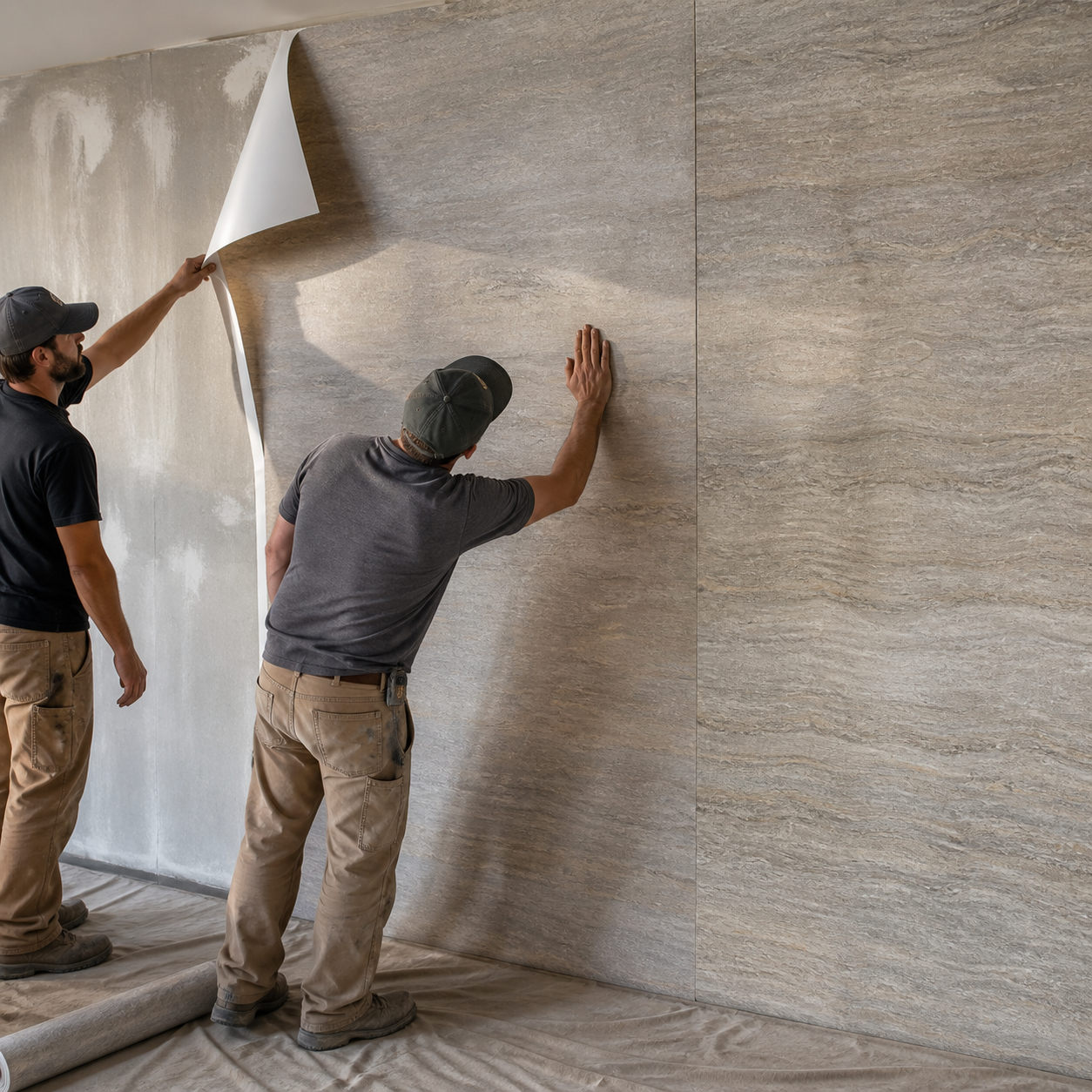
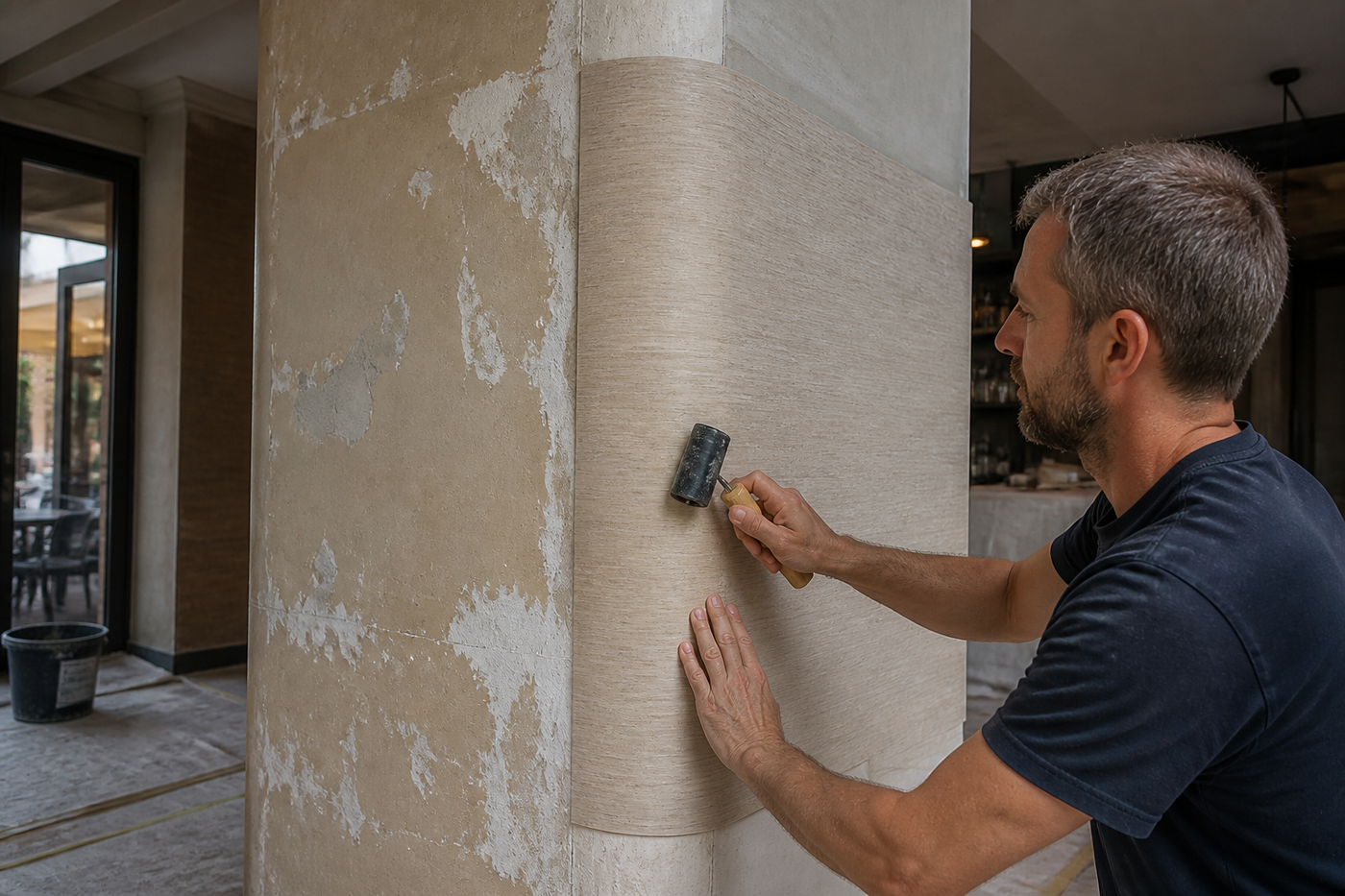
Architectural wall film — a product category in which Fancyfix has deep manufacturing expertise — offers an increasingly viable alternative to traditional wallpaper in commercial hospitality environments. Applied over existing painted or primed surfaces, high-performance wall films can achieve:
ASTM E84 Class A fire ratings (as a composite with the wall substrate)
Moisture and humidity resistance (suitable for bathrooms, spas, pool surrounds)
Removability without wall damage — significant for leased premises and renovation cycles
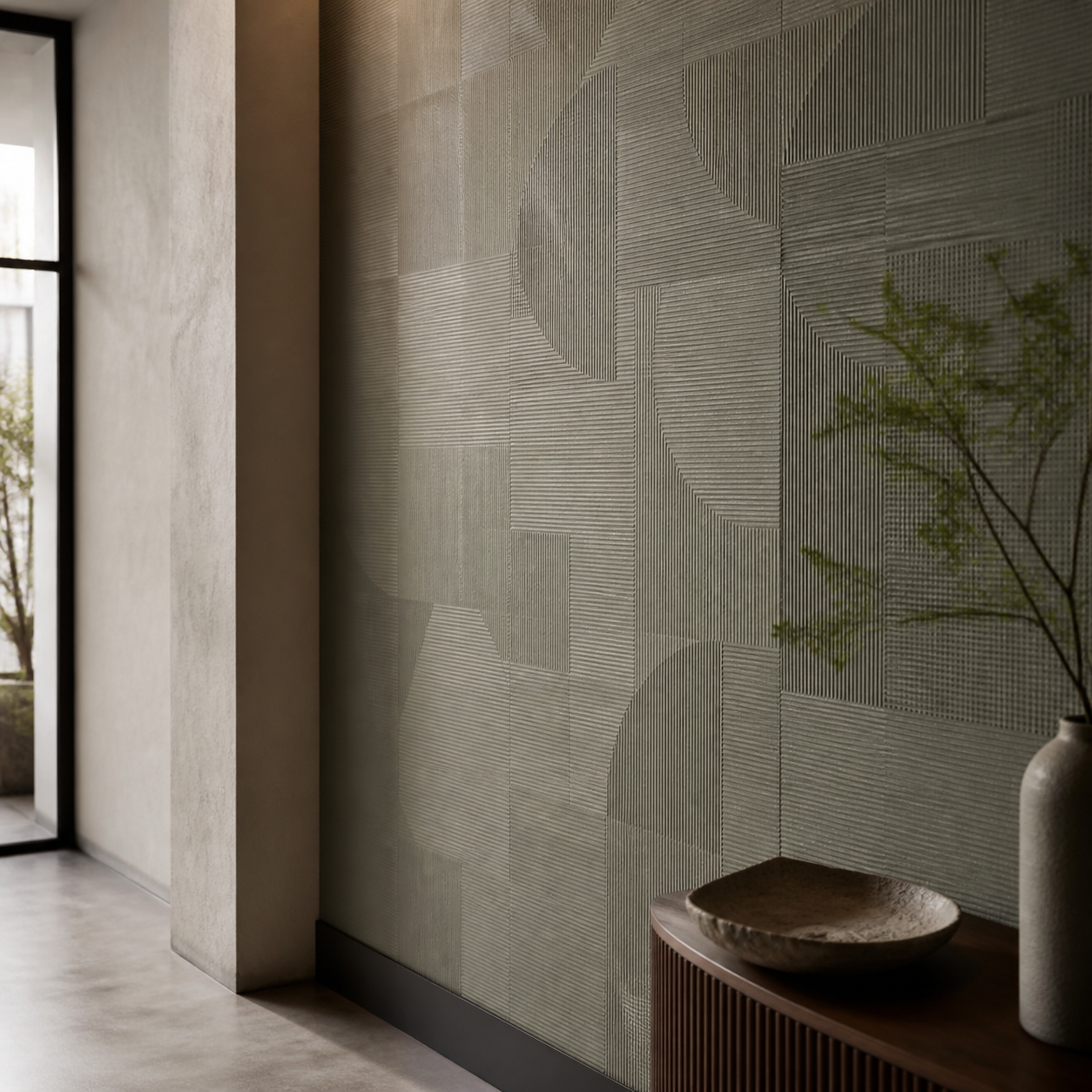
Full-color digital print, metallic finishes, and textured emboss patterns
Anti-microbial surface coatings for healthcare-adjacent hospitality environments
Cost Comparison: Wallcovering vs. Paint vs. Wall Film
| Option | Approx. Material Cost / m² | Installation Cost / m² | Lifespan (Commercial) | Fire Cert Available? | Custom Design? |
| Premium Paint (2 coats) | $3–8 | $8–15 | 3–5 years | Yes (substrate only) | Limited colors |
| Type I Commercial Wallpaper | $12–28 | $10–20 | 7–10 years | Yes — B1/Class B+ | Pattern limited |
| Type II Commercial Wallpaper | $22–55 | $12–22 | 10–15 years | Yes — Class A/B1 | Custom available |
| Architectural Wall Film (Fancyfix) | $8–35 | $6–14 | 5–10 years | Yes — ASTM E84 Class A | Full custom print |
| Designer Wallpaper (residential grade) | $35–120+ | $15–30 | 3–7 years | Rarely certified | High design range |
Cost estimates based on mid-range hotel renovation specifications. Installation costs vary by market and labor rates. Material costs reflect FOB factory pricing for bulk orders.[14]
How to Source Commercial Hotel Wall Film at Scale
Hotel groups, specification architects, and regional distributors sourcing commercial wallcovering at scale face a distinct set of procurement challenges that differ fundamentally from residential purchasing. Volume consistency, batch traceability, lead time predictability, and documentation management are the four axes on which a hotel-grade supplier must be evaluated — often before any design conversation begins.
Batch Consistency & Color Traceability
For a hotel renovation project involving 200+ rooms, wallcovering is inevitably produced across multiple production batches. Batch-to-batch color deviation is the single most common source of post-delivery quality disputes in commercial wallcovering supply. The industry benchmark for acceptable color deviation is Delta E ≤2 — measured using a spectrophotometer against a retained master standard sample.
At Fancyfix, every commercial wallcovering production run is assigned a batch tracking code that links to the ink formulation record, substrate lot number, production date, and retained physical sample. This allows precise reordering with color match guarantee — a critical capability for hotel groups that phase renovations over 12–36 months.
OEM & Custom Design Programs
Fancyfix operates a dedicated OEM division for hotel groups, brand owners, and distributors requiring custom-branded wallcovering. Our program supports:
Custom colorways matched to Pantone, RAL, or physical brand standard samples (ΔE ≤2 guaranteed)
Private label packaging with brand logo, installation instructions, and local market certifications
Design collaboration for bespoke pattern development — from initial concept to production-ready artwork
Phased delivery scheduling aligned to renovation timelines, with batch codes retained for reorder matching
Multi-market documentation pack: ASTM E84, EN 13501-1, AS 5637, and DIN 4102-1 certificates available in a single project file
Frequently Asked Questions
What fire rating does hotel wallpaper need in the United States?
In the US, commercial hotel wallcovering must meet NFPA 701 (Standard Methods of Fire Tests for Flame Propagation of Textiles and Films) and ASTM E84 Class A (Flame Spread Index ≤25, Smoke Developed Index ≤450) for all public areas including corridors, lobbies, stairwells, and common spaces. For guest rooms, Class B may be accepted in some jurisdictions, but Class A is recommended for new specifications. California additionally requires compliance with California Title 19 fire standards. Always confirm the applicable code with your local Authority Having Jurisdiction (AHJ) prior to final specification.[2]
What is the difference between Type | and Type Il wallcovering for hotels?
Type I and Type II are commercial wallcovering performance grades defined by the Wallcovering Association (WA) and tested to ASTM standards. Type I (light-duty) — approximately 12–15 oz/linear yard — is designed for moderate-traffic areas such as guest rooms. Type II (medium/heavy-duty) — approximately 20–28 oz/linear yard — is required for high-traffic areas including corridors, elevators, lobbies, and food & beverage spaces. Type II products have significantly higher tensile strength, tear resistance (≥40 lbf vs. ≥20 lbf), and abrasion resistance (≥1,000 Wyzenbeek cycles vs. ≥300). For a hotel renovation, both types are typically needed; specifying Type I in Type II zones is the most common and costly procurement error.[12]
How long does commercial wallcovering last in high-traffic hotel areas?
Commercial-grade Type II wallcovering — correctly specified and professionally installed — has a typical service life of 10–15 years in hotel corridor environments. Factors that shorten this include improper substrate preparation prior to installation, use of incompatible adhesives, inadequate ventilation leading to moisture behind the wall, and mechanical impact from unprotected luggage trolleys or housekeeping equipment. Type I wallcovering in guest rooms typically achieves 7–10 years with standard maintenance. Architectural wall film — which can be replaced without full wall stripping — offers a cost-effective alternative for spaces where design refresh cycles are planned within a 5–8 year window.[3]
Can I specify a custom design or brand pattern on fire-rated commercial wallcovering?
Yes, with one critical caveat: the fire certification must have been conducted on the composite product — meaning the certified substrate together with the print process and ink system that will be used for your custom design. A certificate issued for a blank substrate does not automatically transfer to a custom-printed version of the same product. When engaging Fancyfix for custom-designed hotel wallcovering, we confirm in writing whether your custom print specification falls within the existing test scope, or whether supplementary testing is required. For most standard digital print programs on our certified substrates, the composite certification is maintained.
References & Sources
[1]International Building Code (IBC) 2021 — Chapter 8: Interior Finishes (Sections 801–804)
https://codes.iccsafe.org/content/IBC2021
[2]National Fire Protection Association — NFPA 701: Standard Methods of Fire Tests for Flame Propagation of Textiles and Films (2019 Edition)
https://www.nfpa.org/codes-and-standards/nfpa-701
[3]ASTM International — ASTM F793: Standard Classification of Wallcovering by Durability Characteristics
https://www.astm.org/f0793-10r17.html
[4]California Air Resources Board (CARB) — Suggested Control Measure for Architectural Coatings & VOC Limits (Phase II)
https://ww2.arb.ca.gov/rulemaking/2019/archcoat2019
[5]German Environment Agency (UBA) — Blauer Engel Eco-Label for Low-Emission Interior Products (RAL-UZ 132)
https://www.blauer-engel.de/en/products/living-home-decor/wall-floor-coverings
[6]J.D. Power — 2023 North America Hotel Guest Satisfaction Index Study: Noise & Comfort Findings
[7]European Commission — EN 13501-1:2018 Fire Classification of Construction Products and Building Elements
https://www.en-standard.eu/une-en-13501-1-2019
[8]Standards Australia — AS/NZS 5637.1:2015: Determination of Fire Hazard Properties — Wall and Ceiling Linings
https://www.standards.org.au/standards-catalogue/sa-snz/building/bd-026/as-nzs-5637-dot-1-2015
[9]Japan Ministry of Land, Infrastructure, Transport and Tourism (MLIT) — Building Standards Act Interior Finishing Restriction Requirements https://www.mlit.go.jp/jutakukentiku/build/index.html
[10]Deutsches Institut für Normung (DIN) — DIN 4102-1: Fire Behaviour of Building Materials and Building Components — Part 1: Classification of Building Materials
https://www.din.de/en/getting-involved/standards-committees/nabau
[11]AFNOR — NF P 92-503: Safety Against Fire — Building Materials — Classification Tests on Products
https://www.boutique.afnor.org
[12]Wallcovering Association (WA) — Standard for the Testing and Classification of Commercial Wallcovering (Type I, Type II, Type III)
https://www.wallcoverings.org/standards
[13]Wallpaper from the 70s — Guide Hotel Wallpapers: Unique Designs Meeting Stringent Building Regulations (Reference Article)
[14]RS Means Building Construction Cost Data 2024 — Interior Finishes: Wallcovering, Paint, and Wall Panel Installation Cost Benchmarks