Introduction
Bright, sunlit workspaces can seem very inspiring. However, too much of it, coupled with a harsh glare, may actually be the invisible source of headaches, eye strain, and lower productivity in commercial spaces. It does not matter whether it is an open-plan office or a retail store; uncontrolled solar exposure can result in discomfort, besides employee focus and customer experience being compromised, overall workplace well-being is also at stake.
Understanding the impact of glare on the human body (sunlight headache) and the ways a proper window film can help prevent it are essential for any work environment. This is the point at which Fancyfix steps in with viable, customizable window film solutions for reducing discomfort while also making commercial spaces more attractive.

Can Sunlight Cause Headaches?
There is a massive number of people questioning: Can the sun cause headaches? The straightforward answer is yes. A sunlight-related headache is often caused by a mixture of factors such as glare, UV exposure, heat, and dehydration in places with large windows and where there is direct sun exposure.
Scientific Approach
Wondering why does the sun give me headaches? Scientifically, bright light overstimulates the optic nerve and activates pain-sensitive pathways that are linked to the trigeminal nerve. This can cause symptoms such as light sensitivity (photophobia), eye strain, and tension in the forehead and temples. Migraine sufferers often find sunlight and headaches are intimately related because the glare and high contrast lighting can trigger a neurological response. The average time for headaches to start after coming into the sunlight was 5-10 minutes in summer, whereas it was 60 minutes in winter.
Things can get even worse when the sun is out, and this situation turns into a problem inside the house if the glass is not treated. Sunlight that passes through glass without any treatment not only heats the indoors but also causes severe glare on the screens and reflective surfaces.
Why Bright Sunlight and Glare Are Common Triggers in Offices & Commercial Buildings
1. Excessive glare from large glass surfaces
Today, most offices and commercial buildings try to have big glass walls to provide a sense of openness and a first-class appearance. Nevertheless, when the sunlight comes through the windows that are not covered, it will make very bright spots on the working tables, computer screens, and shiny floors. This bright light requires the eyes to be constantly refocused, and contrasts must be adjusted, which results in the forehead and temples being cramped.
2. Screen reflection and visual fatigue
In offices, light coming from the sun and reflecting on the monitor or any other electronic device, such as a laptop, tablet, etc., creates conditions of very high contrast. Humans naturally react by tightening the eye muscles or bending to the screen, which results in increased tension in the neck and upper face muscles and causes headaches.
3. Heat buildup and dehydration
Glass without any kind of shading or film permits infrared rays to enter a room, which causes the inside temperature to rise. Hot, stagnant air is a factor that not only induces slight dehydration but also tiredness. Both are well-known headache contributors.
4. Prolonged exposure throughout the workday
Unlike the case when someone goes out for a short time, an office worker can be exposed to sunlight for about 6 to 8 hours a day. Constant exposure makes eyes more sensitive to light and increases the chance of a headache coming again.
Common but Inefficient Solutions
When a sunlight headache starts bothering the employees, most commercial spaces just go for quick-fix solutions. Although these methods may provide relief for a short time, they usually lead to new problems or lower the efficiency level of the entire workspace.
1. Closing blinds or curtains
When sunlight and headaches are the issues, people usually reach for blinds and heavy curtains first. Of course, they shut out the brightness but also block the natural light totally to the extent that the space becomes reliant on artificial lighting, which can make the interior dull, unattractive, and employees’ morale may drop.
In fact, blinds hardly ever get rid of the glare completely. Besides that, light leaks through the gaps, and the heat keeps building up on the window side.
2. Repositioning desks and workstations
Another common fix is to relocate desks so that they are not next to the window. Even though this may lessen the sun getting straight on the skin, it reduces the options for space planning and disrupts the workflow layout.
3. Avoiding sunlit areas altogether
Some workplaces informally “avoid” the zones with high glare during the hours when the sun is strongest. This, however, is a waste of very valuable floor space and is also detrimental to customer service in commercial settings such as showrooms or storefronts.
How Window Film Reduces Sun Glare and Light Overstimulation
1. Filters harsh light without sacrificing natural brightness
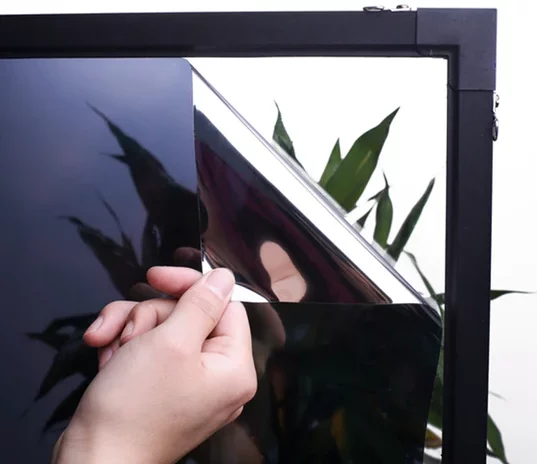
Solar control window film reduces the intensity of outside light while still letting soft, natural daylight into the room. It does this by diffusing the light that comes in and lowering contrast, which is an effective way to reduce visual discomfort, sunlight, and headaches.
2. Reduces the glare on the screens and workstations
Glass that is not treated reflects images on monitors and digital displays, thus causing the user’s eye strain. As a solution to the problem, window film regulates the visible light transmission and, therefore, reduces the glare from different sources.
3. Blocks UV and solar heat gain
Good window film does not let UV rays and IR heat into your apartment. This is why the temperature in the room remains cooler, and people don’t get dehydrated or tired as easily.
4. Keeps aesthetic, productivity, and comfort
Compared with the use of blinds or curtains, window film does not ruin your commercial space’s open, contemporary look. It can ensure glare control nonstop, thus allowing you to keep the flexibility of the layout as before. Moreover, privacy window film solutions can also be utilized to maintain privacy and comfort.
With over 20 years in the window film industry, Fancyfix provides expert support for contractors, distributors, and brand owners. Their end-to-end service—from R&D and manufacturing to customization and global delivery—ensures you get the right solar film solution for any commercial space.
Comparison Table: Window Film vs Blinds vs Glass Replacement
| Factor | Window film | Blinds / curtains | Glass replacement |
| Glare reduction | Reduces glare at the source by filtering sunlight through the glass | Partially blocks light but may leave gaps and uneven glare | Can reduce glare depending on glass type |
| Natural light | Maintains soft, balanced daylight | Often blocks natural light completely when closed | Maintains daylight but may still allow harsh brightness |
| Heat & UV control | Blocks UV rays and reduces solar heat gain | Minimal heat control: heat can build up behind blinds | Improved heat control with specialized glass |
| Impact on sunlight headache risk | Directly addresses light overstimulation and heat triggers | Temporary relief; does not solve root cause | Effective but depends on glazing specification |
| Installation disruption | Quick installation with minimal business interruption | Easy to install but operationally inconvenient | Expensive, time-consuming structural modification |
| Cost efficiency | Cost-effective long-term solution | Low upfront cost, limited performance | High material and labor costs |
FAQ: What Buyers Ask Before Sourcing Solar Window Film
1. How do I select the right solar window film?
Think about light transmission, UV protection, and heat reduction depending on the layout of the building and the climate. Fancyfix also provides advice and project-specific solutions for commercial projects.
2. Can I personalize film specifications and branding?
Certainly, Fancyfix offers custom dimensions, patterns, and OEM/ODM packaging that are perfect for distributors, contractors, and e-commerce sellers.
3. What’s the lead time and supply capacity?
Stock orders will be shipped within 7-15 working days; customized orders will take 10-20 days. Fancyfix guarantees bulk supply availability for global markets such as the US, Europe, and Australia.