Introduction
Whenever privacy options are taken into consideration at the design stage for offices, retail chains, or big commercial projects, the buyers normally see frosted glass and frosted window films as interchangeable alternatives. Even if the visuals were similar, these two are very different in their price structure, sourcing flexibility, installation planning, and long-term operational impact.
For importers, distributors, and project buyers, this decision drives their respective budget management, lead time, replacement strategy, and ability to scale over multiple sites. Here is a comparison of frosted glass and frosted window film from the standpoint of bulk purchasing. Also, it gives an idea of how suppliers like Fancyfix tackle production, customization, and delivery issues that are vital for commercial buyers.
1. What Is Frosted Glass and What Is Frosted Window Film
When it comes to commercial buyers who are analyzing privacy solutions on a large scale, it is important for them to know the main structural and functional differences between frosted glass and frosted window film.
What is frosted glass?
Frosted glass is essentially a glass material that has been permanently treated. Surface frosting effect is obtained by modifying the glass surface through methods such as acid etching or sandblasting, which can be done during the manufacturing stage or as a secondary treatment. The frosting thus becomes a permanent part of the glass.
Typical commercial uses of frosted glass include:
-
Custom-sized glass panel deliveries
-
Installation during construction or major renovation phases
-
Purchasing from glass manufacturers or architectural glass processors
Since the frosting cannot be removed or altered, any change in the interior layout, branding, or tenant would require a complete glass replacement, which, over time, means higher material and labor costs.
What is a frosted window film?
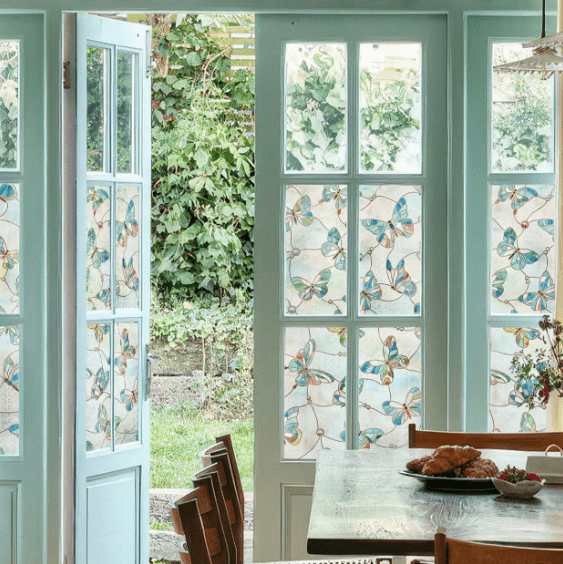
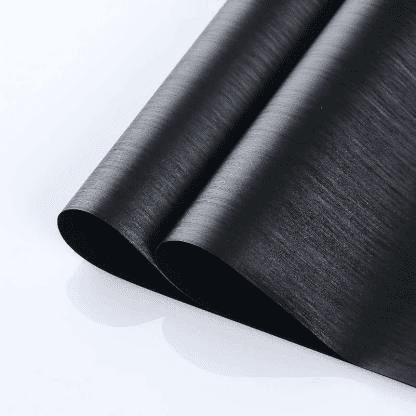
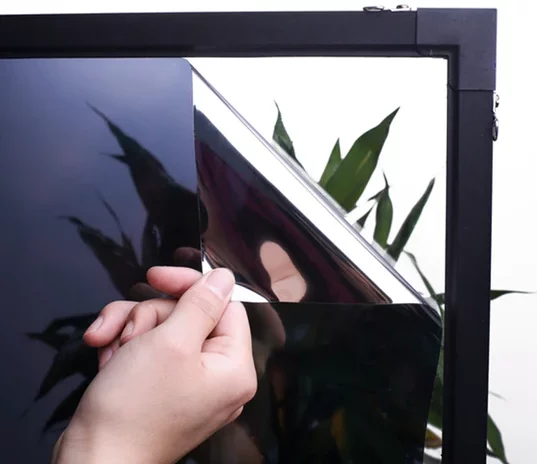
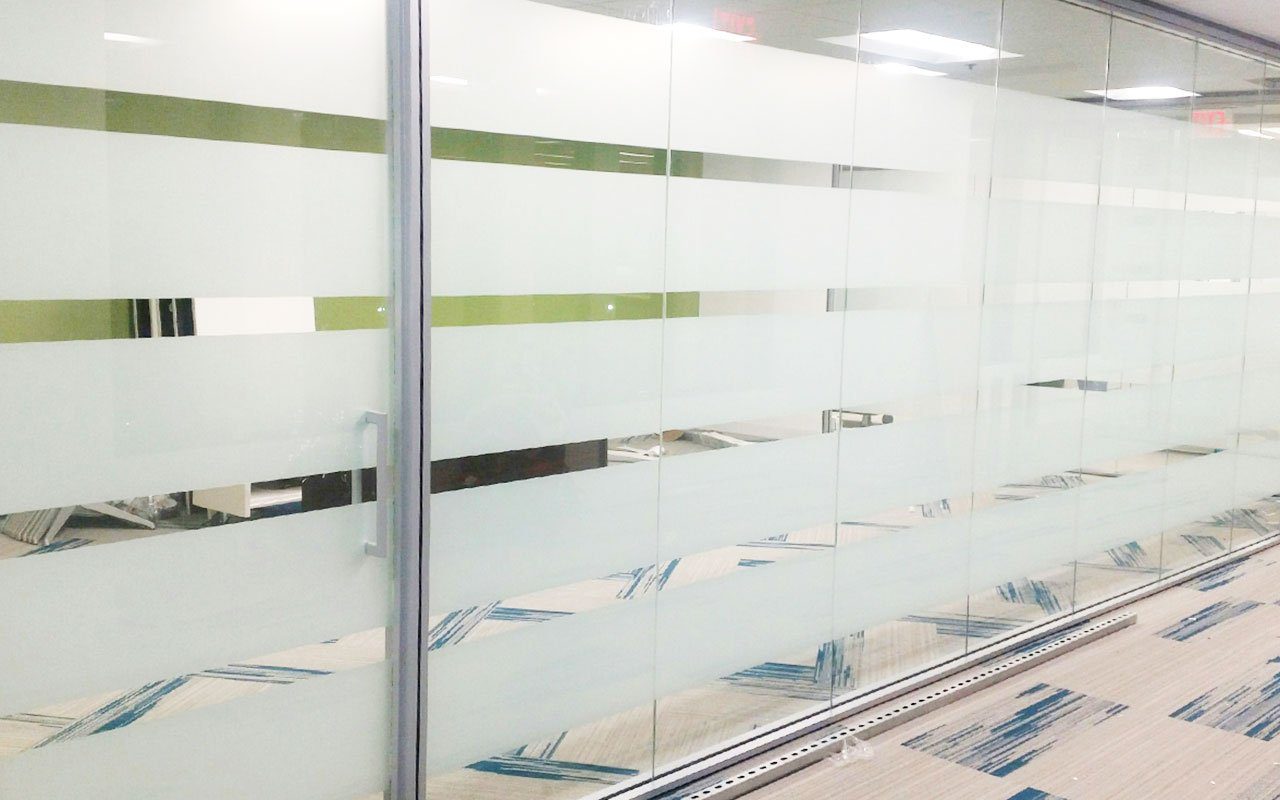
Frosted window film is a simple add-on that gives the glass a frosted look without having to replace the glass. You may have seen or heard it being called film to frost glass, frost film for windows, or window frosting; these are all the same thing. It comes in rolls and is stuck to the glass surface.
In terms of procurement, frosted window film:
-
Involves no glass replacement
-
It is cut and installed on-site
-
Is removable or replaceable when privacy needs change
-
Supports phased installation across multiple locations
[Insert Finished Product Roll Photo Here]
2. Key Differences: Material, Installation, Cost & Flexibility
For commercial and bulk buyers, frosted glass and frosted window films are different in terms of material, installation, cost, and operational flexibility elements, which have an immediate effect on purchasing, scheduling, and the overall expenses.
Material & sourcing
-
Frosted glass: Glass panels that have been permanently chemically treated; custom sizes, heavier, fragile, and higher risk of damage during delivery.
-
Frosted window film: Surface material from a roll; it is standard stock, lighter, easier to store, and distribute to multiple locations.
Installation
-
Frosted glass: Preplanning, special workers, and slow must be handled carefully; errors or changes cause the schedule to be extended.
-
Frosted film: Stick it on the existing glass; quicker, more flexible, and can be a phased rollout across offices or retail venues
Cost structure
-
Frosted glass: Higher initial material and installation cost; replacement is highly costly.
-
Frosted film: Lower initial price, predictable installation, and easier replacement for continuous projects.
Flexibility
-
Frosted film: Removable and allows for rebranding, changes in layout, and lease cycles without high cost or disruption.
Commercial buyers often base their decisions not only on budgets but also on the potential for scaling the business, operational agility, and long-term maintenance when deliberating these options.
3. Which Option is Better for Commercial & Bulk Buyers
Choosing between frosted glass and frost window tint films is a matter of the scale of the project, budget priorities, and the degree of operational flexibility that can be traded. Thus, the decision for commercial and bulk buyers is hardly ever about aesthetics; it is always about total cost, installation efficiency, and long-term adaptability.
When frosted glass makes sense
-
Extensive construction or renovation projects where glass replacement is already on the agenda
-
Cases that require a structural or permanent solution that is part of walls or partitions
-
Purchasers who are ready to account for higher material and installation costs at the outset for long-term durability
When frosted window films are preferred
-
Multiplying site deployments where a standardized inventory and running installation in phases are required
-
Projects with very short lead times or in operational spaces that simply cannot tolerate construction works and delays
-
Purchasers who need privacy solutions with the feature of being updated, removed, or replaced with ease
Suppliers, such as Fancyfix, which has more than 20 years’ experience in window films and functional decorative materials, are proof of how manufacturing-backed solutions can provide customized patterns, stable stock availability, and reliable delivery timelines.
4. Cost Breakdown: Initial Cost vs Long-Term Cost
For commercial and bulk buyers, the total cost of ownership extends beyond just the price of the material; the costs of installation, replacement, and maintenance are just as important.
Initial cost
-
Frosted glass: The upfront cost is higher due to custom panels, permanent frosting, transport, and specialized installation.
-
Frosted window film: The initial cost is lower; it is supplied in rolls, easily cut on site, and installed quickly without replacing the glass.
Long-term cost
-
Frosted glass: It has very limited flexibility; layout or branding changes will need full panel replacement, which means increased labor and material costs.
-
Frosted window film: It is removable and replaceable, thus supporting phased upgrades and multi-location deployments, which in turn helps to decrease the long-term costs.
Takeaway for bulk buyers
Frosted window films are often more affordable and offer operational flexibility. Fancyfix and other suppliers enhance cost efficiency through ready stock, reliable lead times, and customizable options that make bulk procurement and project planning easy.
5. Installation, Replacement & Maintenance Comparison
For commercial and bulk buyers, simplifying the installation, replacement logistics, and maintenance requirements is the main factor in a supplier evaluation and project plan. Frosted glass and frosted window film are quite different in these aspects.
Installation
-
Frosted glass: This involves planning, getting the right labor, and handling the glass carefully. Any errors can cause delays in glass installation, which also depends on the timing of construction or renovation.
-
Frosted window film: It is very easy to install a film on a piece of glass that is already there. The installation is very fast and just takes a short period. It is possible to do a phased rollout for multiple sites without disturbing the operations.
Replacement
-
Frosted glass: If the glass gets damaged or if there is a need to change the level of privacy, then the whole panel must be changed, which causes higher cost and downtime.
-
Frosted window film: Since it is very easy to remove, you can change the film whenever you want to rebrand, change the tenant, or modify the layout without disturbing the work too much.
Maintenance
-
Frosted glass: It is a very strong material and hardly requires maintenance, but in case of scratches or chips, they are not repairable; replacement is required.
-
Frosted window film: If the film wears out a little, it can be replaced partially, and it is very easy to clean. Doing replacement regularly will keep the privacy and look uniform at different sites.
Industry veteran suppliers like Fancyfix, who have accumulated over 2 decades of experience, combine their extensive supply chain capabilities, such as R&D, manufacturing, packaging, and international delivery, and offer commercial buyers with customized strategic advice, thus facilitating the streamlining of installation, replacement, and maintenance across projects.
6. Use cases: offices, retail stores, supermarkets, projects
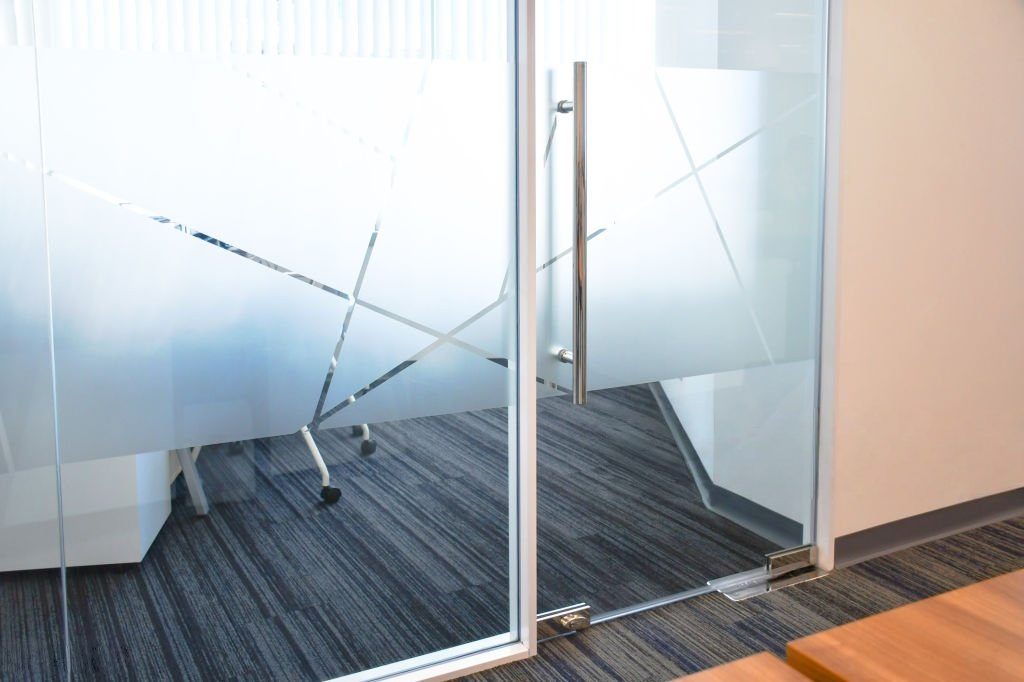
Knowing where frosted glass and frosted window film work best, commercial buyers can effectively plan procurement, installation, and maintenance of these materials for the respective projects.
Offices
Frosted window film is a great solution for office partitions, conference rooms, and coworking spaces where layouts and branding might be changed quite often.
Retail stores
By using frosted film for storefronts and display areas, retailers can stagger their work across different locations, change the degree of privacy seasonally, or refresh the promotional graphics.
Supermarkets & commercial chains
When it comes to large-scale chains, ensuring the same quality throughout, fast service, and cost control are the most important factors. Frosted film is ideal for multiple outlets as it can be bulk ordered, installed in stages, and easily replaced when necessary.
For commercial buyers managing multiple locations, the question often is: how can privacy solutions be deployed efficiently without disrupting operations? Fancyfix has been in the business of servicing contractors, distributors, OEM/ODM clients, e-commerce sellers, and large retail chains for more than 20 years. The company has a good understanding of markets and supports the US, Europe, Australia, and Japan, among others.
[Insert Factory Workshop Photo Here]
7. Comparison Table (Frosted Glass vs Frosted Window Film)
| Feature / Factor | Frosted Glass | Frosted Window Film |
| Material | Permanently treated glass panels; heavy, fragile, custom sizes required | Roll-based film; lightweight, easy to store and ship |
| Installation | Requires specialized labor and careful handling; tied to the construction schedule | Quick, on-site application on existing glass; phased rollout possible |
| Initial Cost | Higher upfront cost (material + installation) | Lower upfront investment; cost-efficient for bulk deployment |
| Replacement | Full panel replacement is needed for damage or layout changes | Removable and replaceable in sections; supports phased updates |
| Maintenance | Durable, but scratches/chips cannot be repaired | Easy to clean; minor wear can be replaced without full panel replacement |
| Scalability | Limited; high cost for multi-location rollout | High, roll-based supply allows easy deployment across multiple sites |
| Best for | Permanent partitions, high-end structural areas | Multi-location offices, retail chains, supermarkets, temporary or flexible spaces |
8. FAQ for importers & wholesale buyers
Q1: Can frosted window film be customized for commercial projects?
Absolutely. Fancyfix, for example, offers custom patterns, sizes, and functional features that make the product perfect for offices, retail chains, and even multi-location deployments.
Q2: How do installation and replacement compare to frosted glass?
Frosted glass needs skilled labor; on the other hand, Fancyfix’s frosted window film is a product that can be glued onto already existing glass windows; thus, it is quicker to install, you can make phased rollouts, and it is also easier to maintain.
Q3: What can buyers do to guarantee a constant supply of goods for bulk orders?
Fancyfix, backed by 20 years of expertise, is a single source that can handle manufacturing, packaging, and international delivery. The company can guarantee a stable stock, predictable lead times, and smooth deployment of large commercial projects.
Q4: What is the typical lead time for bulk orders?
At Fancyfix, stock frosted window film is generally available within 7–15 business days, while customized orders take 10–20 business days, providing predictable timelines for large projects.