The Importance of Glass Breakage
People install window films to control three factors which include heat and glare and privacy and safety. Window films do not cause glass breakage but they change how glass materials respond to high temperatures and stress conditions. Window film selection errors create security hazards when businesses assess their existing vulnerabilities.
The dynamics which lead to better product selection and installation success and worldwide project compliance become better understood by consumers who buy from established suppliers like Fancyfix.
Technical Overview: What Causes Glass to Break
Glass will break if the stress on it exceeds its strength. The most well-known reasons for glass breakage are listed below.
Thermal Stress in Glass
Thermal stress in glass is caused by areas of the glass heating up faster than others. The sun-heated areas expand, while the shaded areas are cooler. This causes stress in the glass. If the temperature difference becomes too extreme, the glass may break.
Window films contribute to this problem. Solar Window films with high solar absorption properties absorb more solar energy, causing the glass temperature to increase. This increases the temperature difference. In some types of glass, this increases the chances of thermal stress breakage.
Glass Edge Stress
Glass edge stress is caused by damage to the edges of the glass. Chipped glass, poor edge finishing, or tight framing of the glass increases the stress on the glass at its weakest point.
The breakage in glass due to edge stress usually begins at the frame and works its way in. Film installation is not the cause of this problem, but increased heat can make it worse.
Glass Defects and Manufacturing Issues
Some glass contains internal glass defects formed during manufacturing. Nickel sulphide inclusions, most often found in tempered glass, can expand slowly over time and lead to spontaneous glass breakage without external force.
These failures are rare but well documented in the glazing industry and are unrelated to film quality.
Mechanical and Impact Stress
Wind loads, building movement, vibrations and accidental impacts all create conditions which lead to building damage. The installation process creates a risk of damage because workers need to handle materials correctly while avoiding excessive force which leads to cracks that start near the glass edge.
Spontaneous Breakage
Tempered glass breaks through spontaneous breakage when no external force applies to the glass. The glass breaks because internal stresses and micro-defects exist inside the material. Nickel sulphide inclusions constitute a common element which expands over time to create sudden stress release.
This breakage phenomenon occurs through random events which scientists cannot predict. Window film does not cause spontaneous breakage, but changes in heat distribution after film installation may coincide with the timing of failure. Buyers need to understand this behavior because it enables them to evaluate window film risk correctly while avoiding misattribution of breakage causes to their conclusions.
Glass Breakage Patterns and What They Reveal
The study of glass breakage patterns enables researchers to determine the primary reason for a failure.
Crack Origin and Propagation
-
Cracks which start at the edge of an object will develop into two different paths which will extend until they reach the edges of the object.
-
The combination of thermal stress and material behavior leads to the creation of straight long cracks.
-
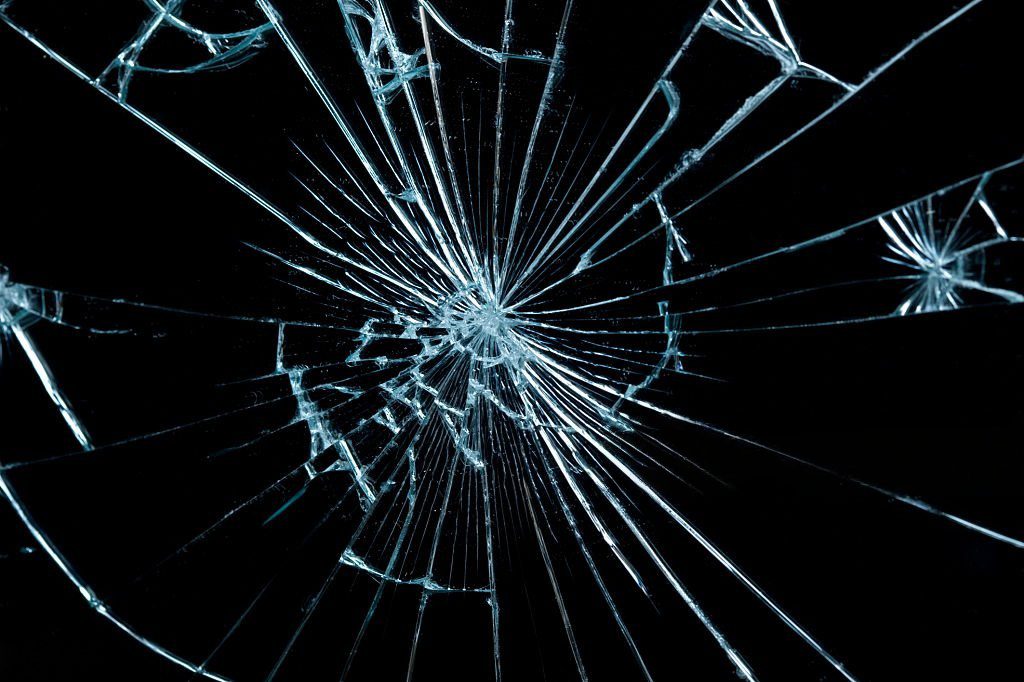
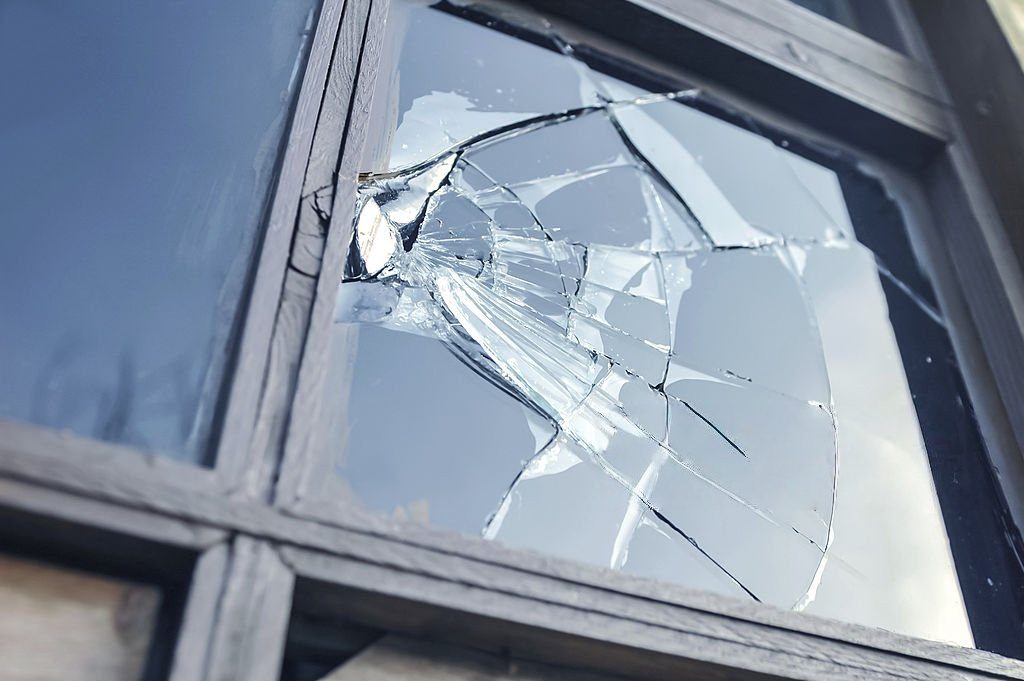
Impact force generates radial or star-shaped cracks which typically occur after an object receives a direct impact.
Differences by Glass Type
-
Annealed glass will break into large shards.
-
Tempered glass will break into small pieces due to the energy released.
-
Laminated glass will stay together as a whole due to the interlayer.
Common Patterns of Fractures Employed in Glazing Analysis
Some surface and edge patterns facilitate the detection of the manner and location of glass failure. These patterns are widely employed in glazing analysis and glass failure analysis:
Mirror area: A smooth and reflective area around the point of fracture. A larger mirror area is usually associated with lower stress at the time of fracture.
Mist and hackle marks: Rougher areas that develop as the fracture speed increases. Hackle lines always point towards the direction of the fracture.
Feathering: Fine, curved lines that develop from the main fracture. Feathering is usually employed to identify the tension side of the glass.
Ripples (Wallner lines): Wavy marks that develop from stress waves generated during high-speed fracture. These marks are usually associated with fast fracture under internal stress.
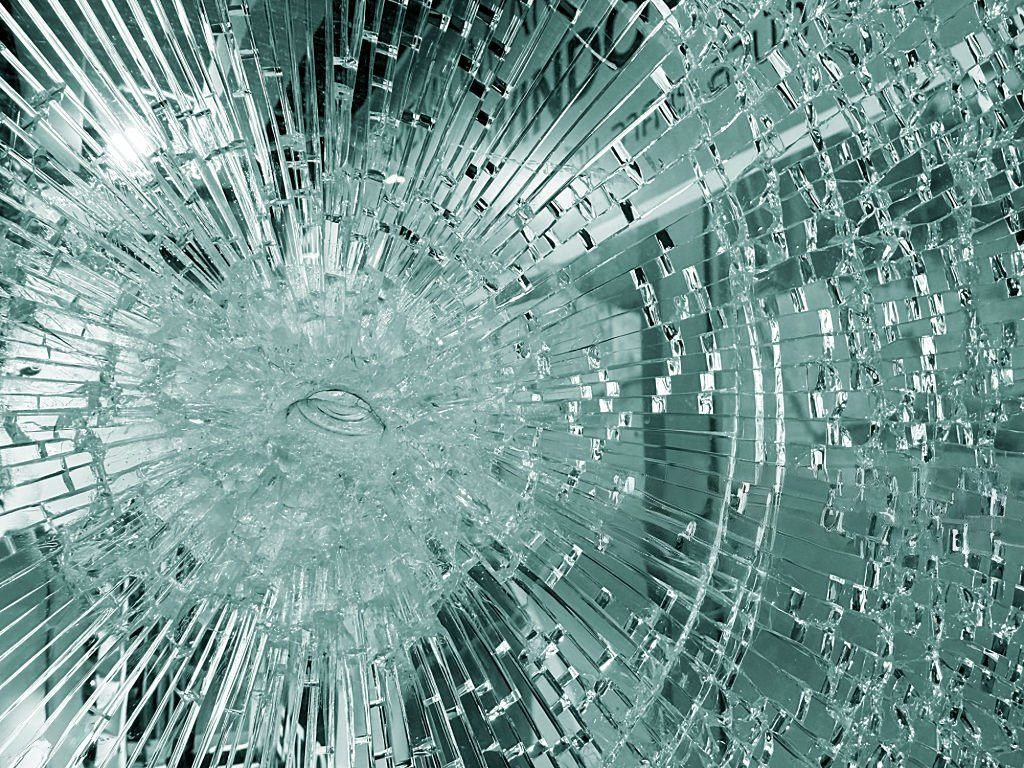
As introduced earlier, safety window film can mitigate the hazards posed by glass fragments when glass breaks.
Window Film and Glass Interaction: Risk and Control
Window film does not cause glass breakage. It can, however, exacerbate stress factors if conditions are not favorable.
Importance of Pre-Installation Inspection
Pre-inspection is one of the most effective ways to reduce window film risk. This includes:
-
Identifying glass type and thickness
-
Checking for edge chips or cracks
-
Reviewing shading patterns and framing conditions
Matching Film Type to Application
Different applications require different film properties. Privacy window films and custom window films should be evaluated carefully based on exposure and glass condition.
Practical Guidance for Buyers and Specifiers
What to Check Before Ordering Films
-
Glass type (annealed, tempered, laminated)
-
Glass thickness and age
-
Existing edge or surface damage
-
Shading from frames or nearby structures
[Insert glass edge damage photo here]
Questions Buyers Should Ask
-
Has thermal stress been evaluated?
-
Is the film suitable for this glass type?
-
What is the film’s absorption level?
-
Are safety or low-stress options available?
How to Specify Films Correctly
Clear specifications should document glass conditions, require inspection, and match film performance to environmental exposure. This reduces disputes and long-term failure risk. Fancyfix can recommend suitable window film parameters tailored to the specific technical and environmental requirements of your project.
Comparison Table: Breakage Causes and Film Selection
| Breakage Cause | Typical Pattern | Risk Factors | Film Selection Notes |
| Thermal Stress | Linear or edge cracks | Uneven shading, high absorption films | Choose low-absorption films |
| Edge Stress | Cracks from glass edge | Poor grinding, tight frames | Inspect edges, allow expansion |
| Internal Defects | Sudden shattering | Nickel sulphide inclusions | Consider safety or laminated glass |
| Impact Stress | Radial cracks | Wind, objects, handling | Ensure proper installation |
Frequently Asked Questions
Does window film create glass breakage risk?
The answer is no because film raises thermal stress levels yet existing problems in the glass result in breakage.
Which glass types are most susceptible?
Annealed glass and older installations are generally more vulnerable.
How does glass cracking happen because of thermal stress?
Glass breaks when uneven heating produces expansion forces that go beyond its built strength.
How can window film risk be minimized?
The process requires proper film selection and glass inspection together with specific film characteristics that match their intended use.
Using Breakage Knowledge to Make Better Film Decisions
Safe and effective window film application depends on understanding the causes of glass breakage. The film itself is not responsible for breakage because it requires other factors to develop. The combination of thermal stress with edge conditions and internal defects and mechanical forces creates the problem.
This information enables procurement teams and distributors and specifiers to conduct better pre-inquiry research while selecting products with higher reliability. The selection of proper films together with established suppliers like Fancyfix helps buyers achieve effective compliance and system performance maintenance throughout their international projects.