Sunlight is a great gift. It provides amazing light for us to go about our days, plays a vital role in our health, and supports the overall balance of nature.
However, the sun also emits ultraviolet rays which can be harmful to your health. They can also cause the fading or degradation of items such as fabrics, carpets, or furniture in your home.
Consequently, when shopping for window films, it is highly advisable to prioritize options that offer high levels of UV protection. This, therefore, brings us to the question of the day: which are the best window film options for UV protection? Or more specifically, what are the best window films for blocking uv rays for residential, retail, and large commercial facilities?
Here is a quick guide to help you identify the right solutions.
Understanding UV Protection
Sunshine emits heat, light, and UV rays. Different materials react to these factors in different ways. They either:
- Absorb and block their transmission
- Reflect away heat, light, or UV rays
The secret to UV protection, therefore, is to choose window films made using materials that are particularly effective at either absorbing or reflecting UV rays. These principles are foundational when evaluating any uv filter for windows, window film to block uv rays, uv window films, or window uv protection film in large-scale procurement.
Ceramic Window Films
Ceramic window films are made using different layers of materials. The layer comprising tiny evenly spread ceramic particles, however, is what makes a vital difference in UV protection. This is because ceramic material has reflective properties and the ability to filter up to 99% of UV rays.
Notably, this type of window film still delivers:
- A great flow of light (often indicated as VLT %)
- Window clarity
- High heat rejection (often indicated as IR %)
Pros
- Ceramic window film is durable as it is not susceptible to corrosion.
- They do not significantly alter the look or aesthetic of the windows.
- They do not interfere much with cell phone or wifi signal transmission.
- They are highly durable.
Cons
- They cost a bit more than most window films due to the high technology processes involved in their production.
 This category is often preferred by buyers seeking best uv film for home windows or uv light film with excellent durability.
 This category is often preferred by buyers seeking best uv film for home windows or uv light film with excellent durability.
Spectrally Selective Window Films
As we mentioned above, solar energy has multiple components; light, heat, and UV rays. A spectrally selective window film is made using materials that can filter out specific components in this spectrum of solar energy.
The materials most distinctly comprise a compressed layer of rare metal particles. They are highly effective at filtering out UV rays and infrared rays; they emit the heat we experience from sunlight.
The rare metal particles are evenly spread out using a method known as spattering to ensure that there are no spaces between the particles. In turn, every inch of a spectrally selective window film provides reliable protection against UV and infrared rays.
Pros
- They allow a good flow of natural light
- Blocking infrared rays offers the extra benefit of temperature control
- They reduce sun glare.
Cons
- Professional installation is recommended for this type of window film. This may increase costs.
- Spectrally selective window films cost more than typical window films.
These films are widely adopted in high-end commercial installations seeking best window film to block sun heat or window film to block sun without sacrificing transparency.
Reflective Window Films
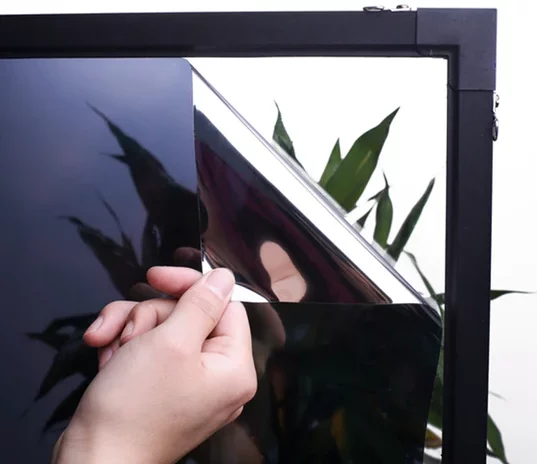
Reflective window films are also known as mirror window films or metalized window films. They consist of a layer of film coated with metallic materials like aluminum and others.
The metallic materials have high reflective capabilities. Reflective window films thus protect you against ultraviolet rays by bouncing them off of your windows instead of allowing them to flow into your space and cause harm.
Pros
- They reflect away UV rays as well as excess heat and light to create a pleasant ambient environment.
- They are relatively affordable.
Cons
- They alter the appearance of windows by making them visibly reflective.
- The metalized layer may interfere with wifi or cell service transmission.
- Some metalized window films may be susceptible to corrosion.
Hybrid Window Films
Hybrid window films combine two methods of window film treatment to offer an enhanced solution. Their layers are dyed and metalized to provide:
- UV protection
- Glare reduction
- Heat regulation/Infrared protection
The combination of dye and metalization makes hybrid window films more effective. The reflective abilities of the metalized layer bounce UV rays away from windows while the dye offers an extra layer of protection by absorbing the UV rays that may get past the reflective layer.
Pros
- They have a lower level of metal components and thus do not pose a high threat of signal interference.
- They offer more protections beyond UV blockage.
Cons
- The dyed layer may fade over time and the metalized layer may corrode too. Both factors may reduce the durability of these window films.
- Their reflective outlook alters the aesthetic of windows.


Carbon Window Films
Carbon window films have a layer of material treated with carbon particles. The carbon particles form a tint that provides high ultraviolet (UVR) and infrared (IVR) rejection.
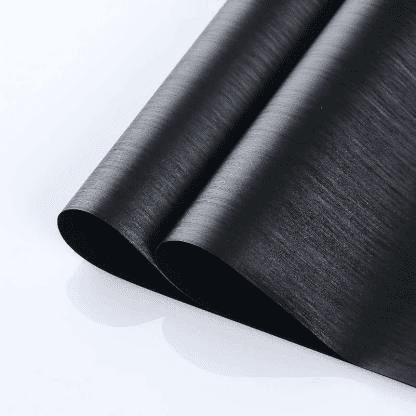
The carbon tint has a matte finish that alters the look of windows slightly and is not as bright or conspicuous as metalized window films.
Pros
- They strike a fair balance between high UV protection and affordability.
- They are more durable than dyed or metalized window films and are fade-resistant.
- They do not present any signal interference challenges.
Cons
- The carbon tint lowers the transmission of light through windows; the interior of your space may, therefore, be less bright than the outdoors.
Professional Installation Standards & Application Specifications
For commercial, retail, or large public facility projects, the installation quality significantly affects the performance of uv protection window film, window uv block, or best home window film for heat rejection.
1. Surface Preparation
-
Glass must be cleaned with neutral detergents and non-abrasive tools.
-
Adhesive residues and contaminants must be removed.
-
Moisture must be minimized to ensure proper adhesion.
2. Climate Requirements
-
Installation temperature: 18°C–30°C
-
Humidity: < 65%
-
Avoid direct sunlight during application to ensure film stability.
3. Application Method
-
Use professional-grade squeegees to remove trapped air.
-
Dual-blade cutting ensures precise framing.
-
Edge sealing recommended in humid environments.
4. Curing Period
-
7–30 days depending on thickness.
-
No chemical cleaning during this period.
Proper installation ensures the full performance of uv filter for windows, window film to block sun heat, and uv light film.
Technical Performance Specifications
Procurement teams evaluating uv window films should assess these parameters:
| Performance Metric | Meaning | Recommended Value |
| UVR (%) | UV rejection | ≥ 98–99% |
| IRR (%) | Infrared heat rejection | ≥ 85–90% |
| VLT (%) | Light transmission | 20–70% |
| SHGC | Heat gain coefficient | ≤ 0.45 |
| TSER (%) | Total energy rejected | ≥ 50–60% |
| Film Thickness | Durability | 1.5–4+ mil |
| Adhesive Type | PSA or dry adhesive | PSA preferred |
Procurement Standards for Commercial & Industrial Buyers
1. Compliance Requirements
-
NFRC, EN 410, ISO 9050 certifications
-
Fire safety ratings (ASTM E84)
-
Environmental compliance such as RoHS / REACH
2. Minimum Performance Benchmarks
-
UVR ≥ 99% for premium environments
-
TSER ≥ 55% for energy-focused facilities
-
IRR ≥ 90% for sun-intense climates
3. Supplier Qualification
-
Batch testing records
-
Large-volume supply capability
-
Certified installation partners
-
Comprehensive warranties (adhesive, clarity, corrosion, UV stability)
4. Cost–Benefit Evaluation
Assess:
-
Cost / m²
-
Installation cost
-
Expected lifespan
-
Energy savings
-
Reduction of maintenance and replacement frequency
This is essential for large procurement projects requiring window film to block uv rays or best window film to block sun heat across multiple sites.
Tips on Choosing Window Films for UV Protection
Check the UVR Rating
The ultraviolet rejection rating will tell you how much protection a specific window film can offer against UV rays. The higher the UVR percentage the more the protection.
Consider the Quality
Make an effort to read through the window film material details and the protection ratings indicated by the manufacturer. This will tell you a lot about the quality of the window film and whether it is worth investing in.
Weigh Cost Vs Needs
Ceramic window film is a great pick if your budget is adequate. However, if you have limited resources, you can explore options like quality carbon window films or hybrid window films. They cost less but they can provide adequate UV protection for short to medium term durations.
Final Thoughts
Understanding how window film UV protection works is a more effective approach than choosing your window films based on a brand name. Especially considering lots of brands conceal key details in the fine print and price their products higher based on their prominence.
Now that you know what to look for, we hope you find the right window films for your needs. Better still, reach out to us Fancyfix to order or request a quote. Our window films offer high UV protection and beautiful aesthetics. No fine print evasions, just clear details and reliable quality.